
Diversity Is in the Experience of the Beholder
Nov 10, 2026In my work with organizations I have encouraged leaders to lean into the Subjective—to “subjectify” cultural challenges, including how they understand diversity and inclusiveness. This means centering the real-life experiences of people in the organizational context, including their own.
In the current climate, many organizations are (re-)creating and/or restating a commitment to inclusiveness and an inclusive culture while quietly retiring the word and pursuit of Diversity. I understand the politics of this choice. I worry about the cost. Without a clear sense of the diversity that can or should be included, inclusiveness risks becoming an empty vessel: warm in intention, vague in focus.
Just as diversity needs inclusiveness to turn into value, inclusiveness needs a clear understanding of diversity to direct its energy. Even if the term diversity disappears from our vocabulary, we still have to ask: where, exactly, should the work of inclusion be applied?
This is where a subjective lens can help. Subjectifying our approach means defining diversity not only, or perhaps not at all, in demographic or categorical terms but in terms of lived experience—specifically, the felt and experienced social distance between people and groups, and the psychological, emotional, and social dynamics that arise from it.
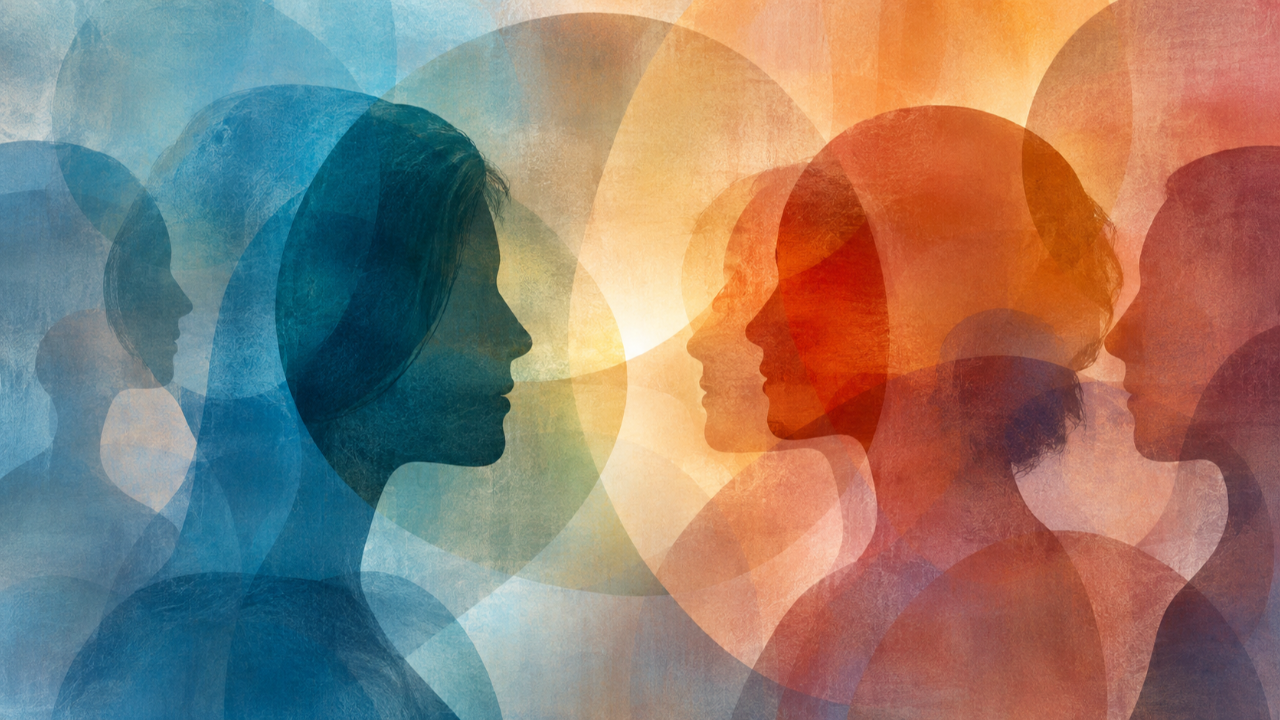
Seen this way, diversity might better describe the landscape of distance: who feels far from whom, and why. Inclusiveness, then, is the purposeful and deliberate application of strategies to reduce that distance—through trust, recognition, shared meaning, and equitable participation. Equity, as experienced fairness, becomes an important criterion and metric for sustaining inclusiveness. And each of these subjectively defined concepts can be translated into quantifiable metrics.
A Brief History of Social Distance
The concept of social distance emerged in the early 20th century in sociology and social psychology. Emory S. Bogardus (1925) developed the Social Distance Scale to measure the degree of acceptance or rejection individuals felt toward members of different social, ethnic, or racial groups. His approach linked attitudes directly to relational proximity—ranging from willingness to accept someone into one’s family by marriage to willingness to exclude them entirely from the country.
Over time, social distance theory expanded to include psychological proximity, status hierarchies, and cultural boundaries. Contemporary research connects it to ingroup–outgroup dynamics (Tajfel & Turner, 1979), contact theory (Allport, 1954), and insider–outsider frameworks (Barth, 1969), showing that perceived distance is not fixed—it can be expanded or contracted through structured interaction, shared identity, and mutual recognition.
Importantly, social distance is not just a number on a scale; it is felt. The lived experience of being “far” or “close” in social terms has multiple intertwined dimensions:
- Belonging vs. alienation — the emotional comfort of being recognized as part of “us” versus the anxiety of being treated as “them.”
- Trust vs. suspicion — whether intentions are assumed to be positive or hostile.
- Status security vs. threat — whether one’s position feels legitimate and protected or precarious and challenged.
- Access to influence — the ease or difficulty of participating in decision-making spaces.
- Symbolic boundaries — the visible and invisible markers of group membership (language, dress, accent, credentials).
- Norm enforcement — who gets to decide what is acceptable and whose behavior is policed.
These dynamics are deeply tied to insider–outsider relations. As Fredrik Barth (1969) showed, group boundaries are socially negotiated; insiders often control the terms of belonging, while outsiders navigate stereotypes, gatekeeping, and tests of legitimacy. Social distance is both a cause and a consequence of these dynamics.
Subjectivity-Based Definitions
If we view diversity, equity, and inclusiveness through a subjective lens, they shift from abstract ideals or demographic checklists into living, relational dynamics and their characteristic experiences.
Diversity can be understood as the condition of experienced distance within a group. It is not a static demographic fact but a dynamic state that can shrink or expand over time. A team may become less diverse in this sense if inclusiveness reduces the sense of distance between members, even without demographic change. Measuring diversity, then, requires paying attention to subjective experience and observable patterns of fragmentation, polarization, or segregation.
Inclusiveness becomes the deliberate practice of reducing that distance. It is not simply an attitude or an aspiration but an active leadership discipline: noticing who feels far, understanding why, and working to close the gap through recognition, trust-building, and shared meaning-making.
Equity, finally, is the experience of fairness in recognition, resources, and influence. It acknowledges that reducing distance often requires differentiated support, because people begin from different starting positions. It is the sense that the relational field is balanced enough for everyone to participate without hidden weights holding them back.
Diversity and Its Discontents
I have always found it shortsighted to associate Diversity too tightly with specific demographic variables (gender or racialized identities, etc.). The tight association with specific demographics has made Diversity pursuits and programs vulnerable to political polarization. After all, diversity, even when tied to demographic variables, is an attribute of groups, not a characteristic of individuals.
Two archetypal worldviews seem to shape the push and the push-back that surrounds Diversity currently and that organizations need to delicately navigate, if not balance, in this hyper-politicized environment.
- The critics’ view: Diversity is “code” for promoting the unqualified and undeserving. The belief is that current systems are essentially just and meritocratic, rewarding performance; diversity initiatives are seen as undermining this natural order. That these systems tend to favor white men is viewed not as a flaw but as proof of merit. At best, diversity dilutes the cream rising to the top; at worst, it strips the truly deserving—largely white and male—of their rightful privilege.
- The proponents’ view: Diversity is a necessary corrective—rebalancing systems that, left unchecked, reproduce societal prejudice and stigma. Without deliberate intervention, talent remains untapped, potential unrealized, and inequities entrenched. In this frame, diversity enables meritocracy by removing structural barriers, correcting historical bias, and restoring relational health.
Each position has its extremes—from ethnically defined nationalism and proponents of quasi-apartheid on one side to what critics label “radical wokeness” on the other. In today’s climate of political polarization, both risk hardening into ideology.
When we look at the polarized archetypes of diversity critics and diversity proponents through the lens of subjectivity, we see not just competing ideologies but different lived experiences of social distance—and different ways of managing the psycho-emotional discomfort that distance creates.
For critics of Diversity, this perspective reveals a strong need for status security and recognition of self-worth. Diversity is experienced as a threat to personal legitimacy, triggering fear of loss—loss of position, of belonging, and of “earned” privilege. The current structure is seen as a stable, familiar network in which they feel close to others like themselves. Changes that reduce their insider advantage feel like an artificial widening of social distance between them and positions of influence.
For proponents of Diversity, this perspective reveals a moral drive to repair perceived injustice and restore balance in the relational field. Diversity is experienced as a path to legitimacy for historically marginalized identities and as an affirmation of belonging. The current structure is experienced as one in which they or others they identify with are kept at a distance from influence and resources. Efforts toward diversity and inclusion are ways to shrink that distance and rebalance power.
From a subjective perspective, each side is attempting to reduce social distance for their own group—but their starting points differ radically:
- Critics begin with low felt distance (they are already insiders) and interpret diversity-related change as distance, increasing a sense of alienation and anxiety for them.
- Proponents begin with high felt distance (they or their reference groups are outsiders) and interpret change as distance decreasing.
Because distance is relative and experienced from one’s own position, the same initiative can feel like inclusion to one person and exclusion to another.
Bridging the Gap
Bridging these positions requires acknowledging the subjectivity of both experiences without collapsing them into false equivalence. The aim is not to erase differences, but to create mutual recognition of lived and experienced realities. Practical strategies include:
- Make social distance visible. Use tools and dialogue to surface how different groups experience proximity, legitimacy, and belonging in the same environment.
- Work at the boundary. Insider–outsider dynamics soften when people interact across boundaries in shared, meaningful tasks with equal status (see Allport’s Contact Hypothesis).
- Redefine merit in relational terms. Move from “merit as individual achievement” to “merit as contribution to collective capability,” so that inclusion is seen as strengthening the system, not weakening it.
- Create reciprocal inclusion narratives. Show how narrowing social distance benefits everyone’s sense of safety, opportunity, and influence—not just targeted groups.
Bridging does not mean erasing the history or ignoring the power imbalances that shape these subjective positions. It means creating spaces where both insiders and outsiders can recognize the humanity and lived truth of each other—and then co-designing the paths that reduce the distances that matter most.
A Call to Action
The current crisis over the word Diversity is also an opportunity. It allows us to move beyond numbers on a chart toward lived experience as the true measure of inclusion. Organizations are uniquely positioned to lead this shift. They are already global laboratories of proximity and distance, managing people, resources, and ideas across boundaries. By measuring social distance, training leaders to reduce it, and treating inclusiveness as a relational discipline, they can model what polarized societies desperately need.
The vocabulary may change, but the challenge remains the same: how to build inclusive cultures that narrow distance, create fairness, and transcend division. In the end, inclusiveness begins with a simple, courageous question: Who feels far, and why?
Until we ask—and act on the answers—diversity will remain a statistic, and inclusiveness an aspiration, not a lived reality.
This article was originally published on LinkedIn as "Subjectifying Diversity Opens Up a Better Practice" in August 2025.
About the Author
Joerg Schmitz is a business anthropologist passionate about exploring human behavior through the lens of anthropology and organizational culture. He is the founder and Managing Director of The Inclusive Leadership Institute (@TheInclusiveLeadershipInstitute). After 35 years living in the US and working with organizations and institutions globally, he currently resides in Bremen, Germany. Connect with him at [email protected] to continue the conversation.
